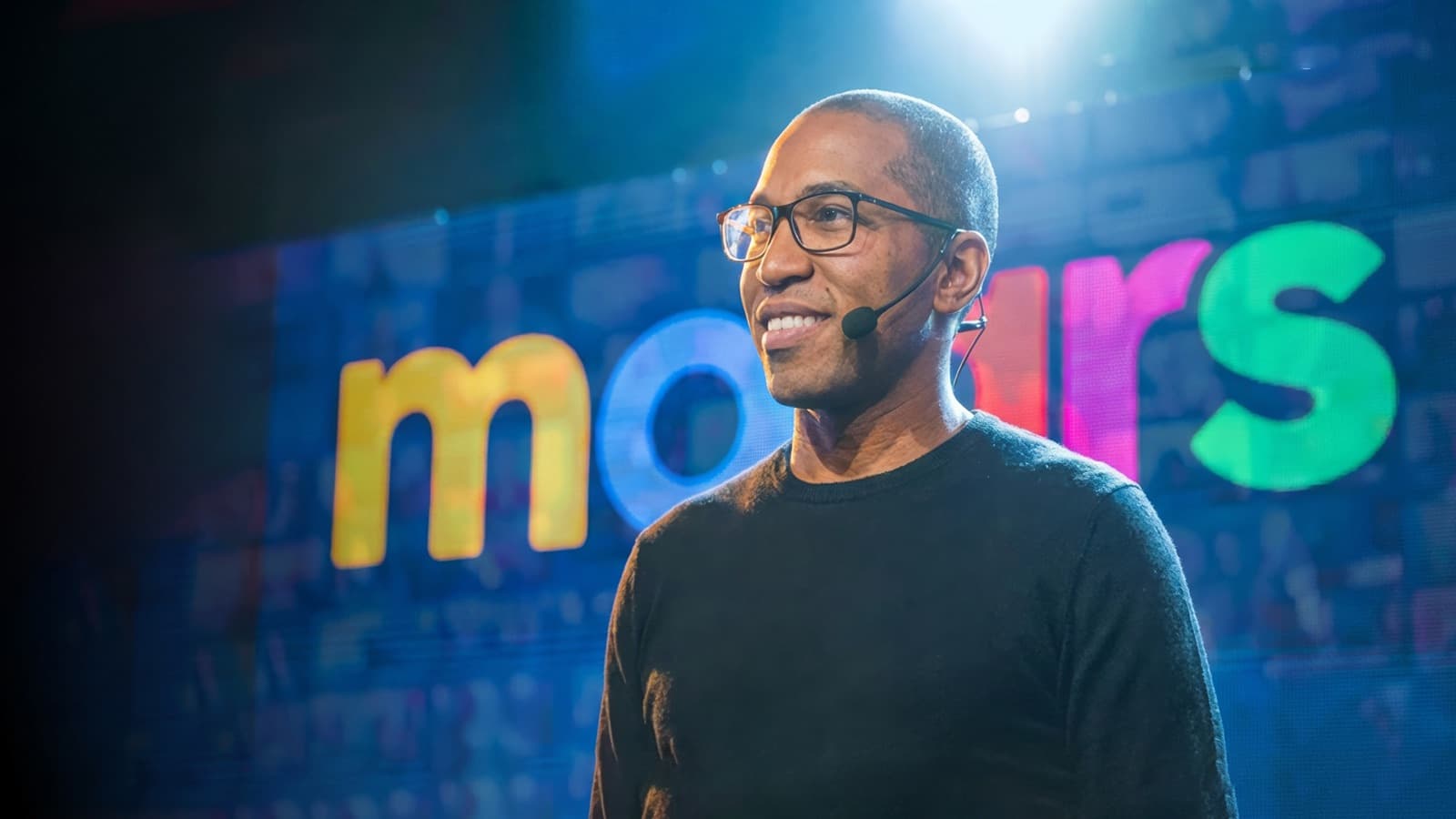
Making learning a permanent collective capability
Your skills change faster than your training plans.
The problem is not that organisations have stopped learning. It is that their learning cycles are still longer than their transformation cycles. Adding courses to the catalogue is not enough when a need appears, shifts and sometimes disappears before the next campaign.
Employers expect 39% of key skills to change by 2030. In parallel, 50% of employees have already taken part in training within long-term learning strategies.
World Economic Forum, Future of Jobs Report 2025Adaptability is not a character trait
Some people seem more comfortable with change. But an organisation cannot base its resilience on a few naturally curious individuals. It has to create the conditions in which anyone can try, learn, share and start again.
Learning faster than the world changes does not promise to foresee the next rupture. It helps the room understand how to raise its learning speed without installing permanent urgency.
The question it addresses
How do you make adaptability a collective capability, rather than a quality expected of every individual?
Who it is for
Company conventions, universities and business schools, federation congresses, start-of-year offsites and public events.
- Adaptability
- Learning
- Career
- Transformation
Choose it if your stake goes beyond today's AI and is about the capacity to absorb the transformations that follow.
What the keynote sets in motion
Telling speed apart from haste
Learning faster does not mean running all the time. It means shortening the distance between a question, an experiment and sharing what was understood.
Seeing what the organisation actually rewards
A company can celebrate learning while penalising the time to try, the mistake or the doubt. The keynote brings those contradictions into the light without making the room feel guilty.
Installing a sustainable habit
Each team can pick one simple ritual: a question explored, a bounded test, a debrief or a shared practice. The aim is a cadence, not one more grand plan.
What happens during the talk
The room builds a short timeline of learning: when does a new need appear? When is it recognised? When can someone experiment? When does what has been learned become available to the others?
The gaps become visible. The audience does not leave with an instruction to “adapt”. It leaves with the precise place where its organisation loses time, and one possible habit for closing that gap.
Ground already worked
At Entre Pro Guise, Salime spoke on “Leadership Transformationnel : l'innovation partout, pour tous et par tous”, on innovation everywhere, for everyone and by everyone. That public reference connects learning, the spread of innovation and the collective capacity to change.
Formats
45 to 60 minutes. Short version from 20 minutes. Up to 90 minutes with a collective exercise. French or English. The content also suits a mixed or student audience.
The questions that come up
Is this a talk about AI?
AI is the revealer and one of the major examples. The wider subject is learning speed in the face of successive transformations.
What does the audience actually do?
Depending on the format, it spots the dead time in its learning cycle, shares a practice, or picks one habit it can test at team scale.
How does it differ from Augmented talent?
Augmented talent is about collective AI adoption today. This keynote is about the capacity to learn the next transformation, whatever it turns out to be.
What does it cost?
The fee depends on the format, the location, the language and how far the content is tailored. The framing call lets us choose between an inspirational keynote, a participatory version and an extension into a masterclass.
Do not wait for the next rupture to learn how to learn
If you want to build a lasting capability rather than a one-off answer, this keynote sets the first rhythm.
Book Salime for Learning fasterThe other keynotes
 Signature keynoteCollective adoption
Augmented talent
Taking a whole organisation from AI ambition to real use.
 Premium executive experienceLeadership and governance
Leading the augmented company
Taking back control of what cannot be delegated to AI.
 Strategic keynotes · Skills
The human advantage
The skills that gain value once expertise becomes free.
 Strategic keynotes · Decision-making
Deciding when everything speeds up
Deciding with AI without giving up quality or responsibility.
 Strategic keynotes · Cooperation
Collective intelligence, first of all
Working better together in teams augmented by AI.
 Modular keynote · by function
Your function, augmented
What AI really changes in your teams' daily work, function by function.