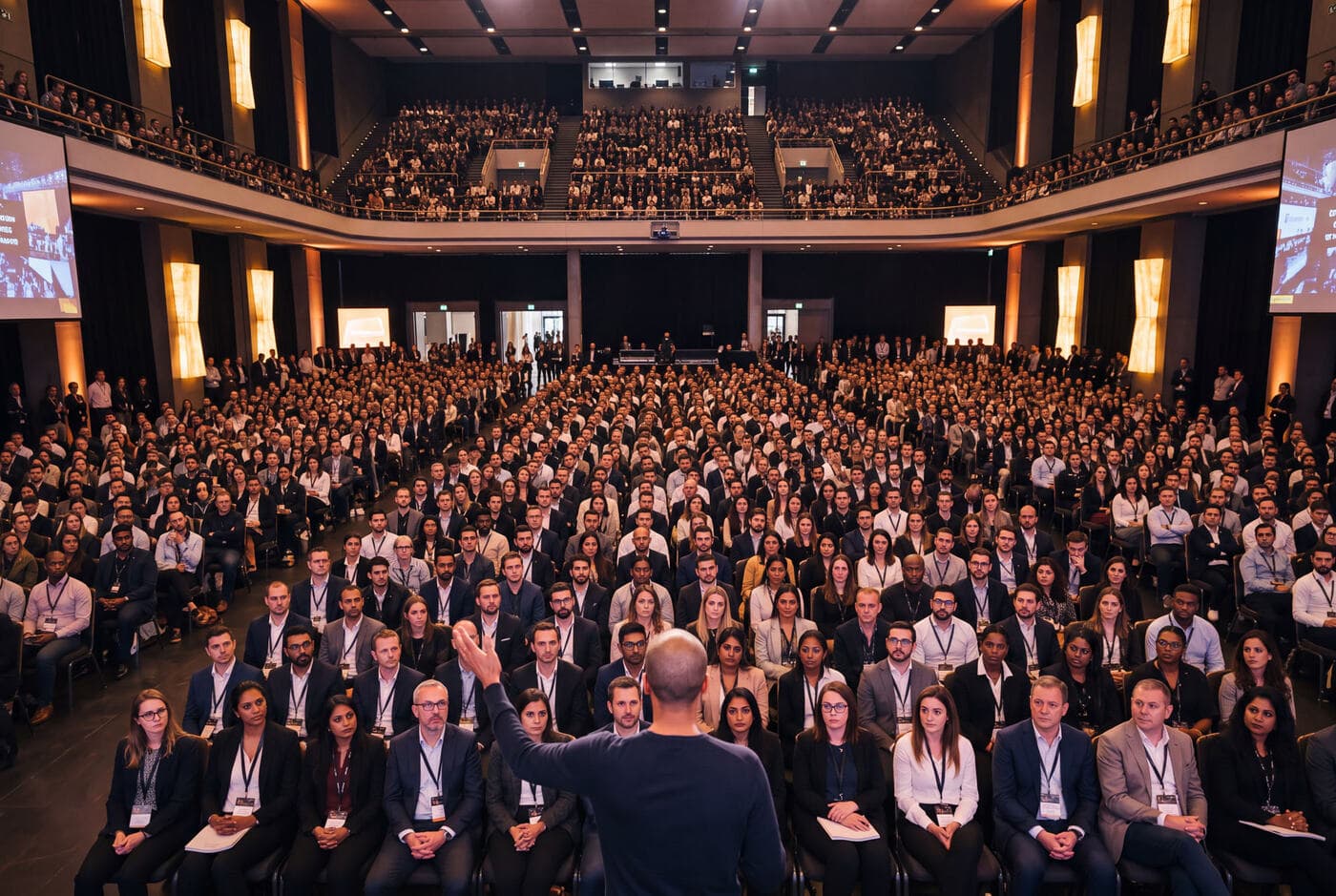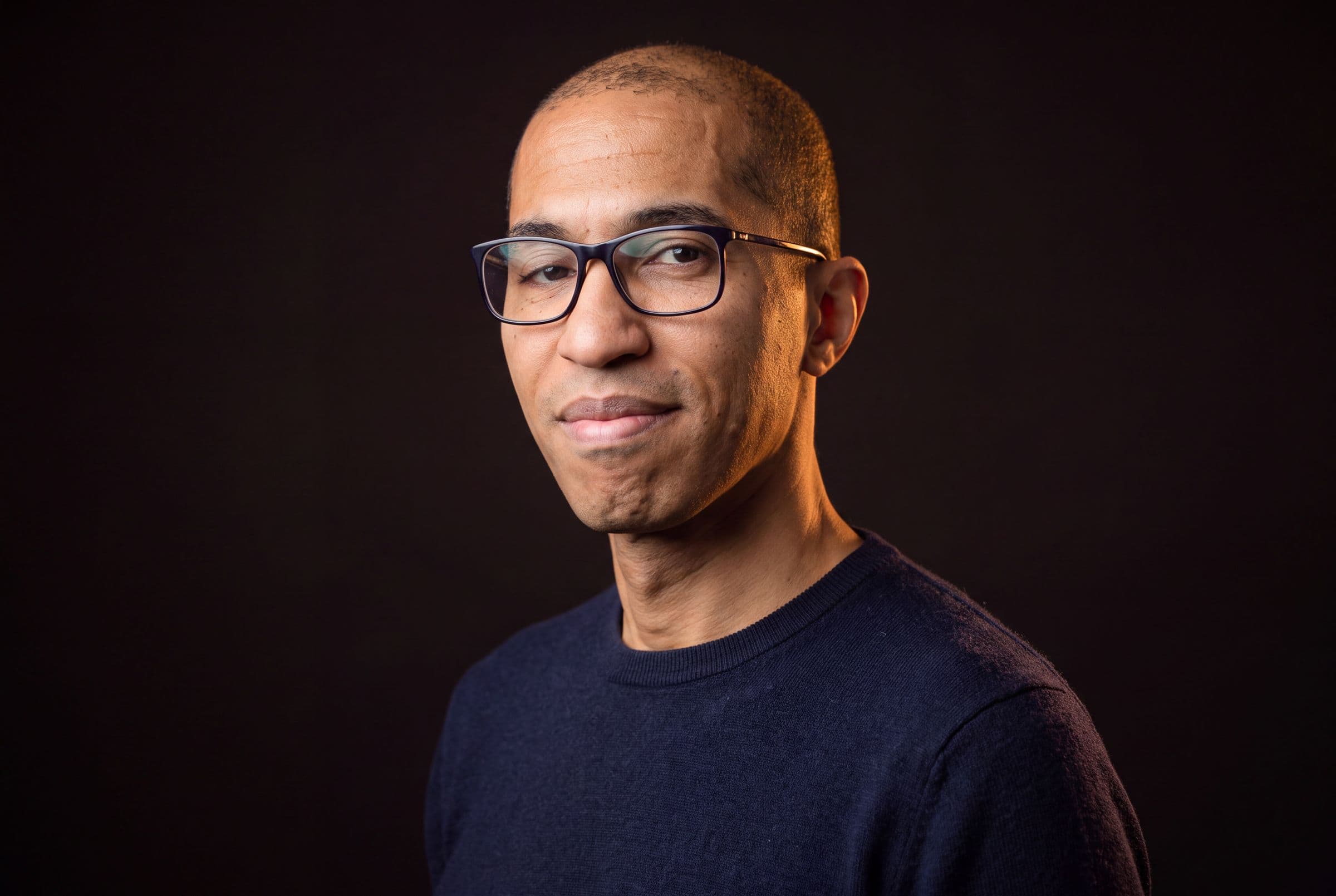
He gets inside your reality
Salime talks with you and, where possible, with several representative participants. He identifies their irritants, their constraints, their vocabulary and the concrete situations they face.
Whatever shape the talk takes, every experience Salime designs follows the Activation Keynote approach: bring people on board, get them taking part, and trigger a concrete move.
Salime's best keynote has not happened yet. It is yours.
This is not a formula. None of his talks is played twice the same way, because no two organisations are at the same point. Before he goes on stage, Salime works through your business problem, the real uses in your sector and how far each of your populations has actually gone. What your audience sees is its own work.
Depending on the goals of the event, the talk can include questions to the room, exercises or participatory sequences. Interactivity is a palette, never a gimmick.
Salime talks with you and, where possible, with several representative participants. He identifies their irritants, their constraints, their vocabulary and the concrete situations they face.
Real adoption is never uniform. Leaders, managers, business functions, front line: each group is at a different stage. The keynote starts where they are, not where we would like them to be.
The examples, the demonstrations and the interactions come from your organisation and your sector. Your audience is not watching transformation from a distance: it sees its own work.
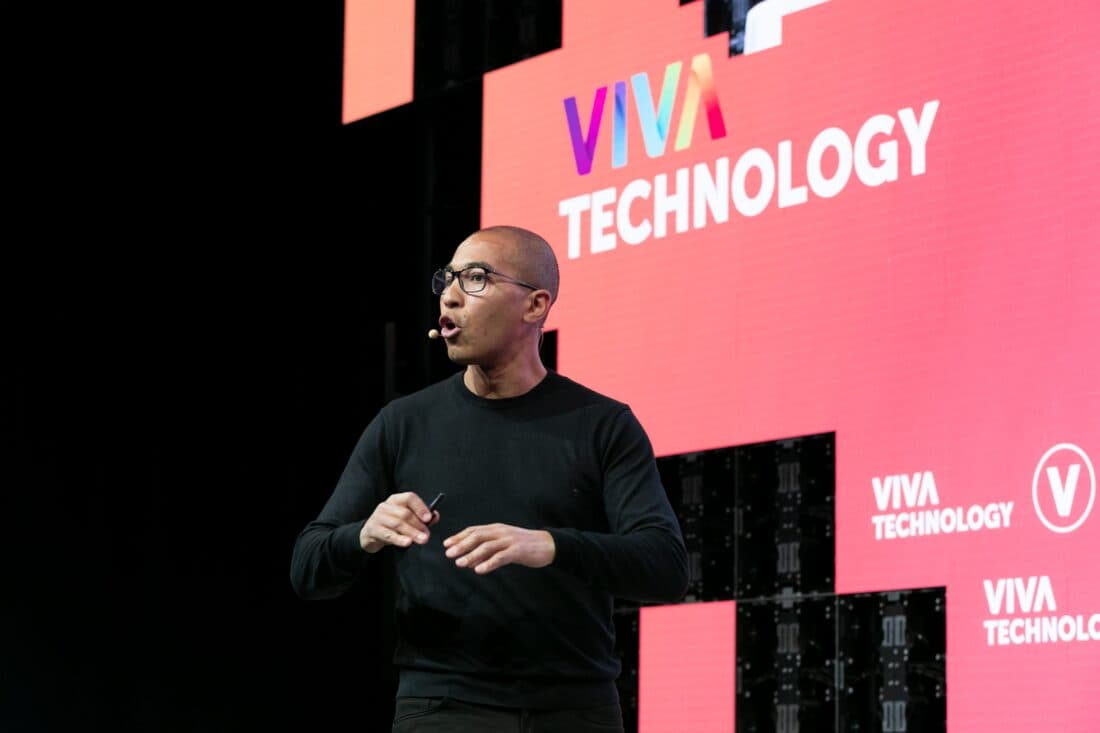
Inspire, align and set a collective in motion.
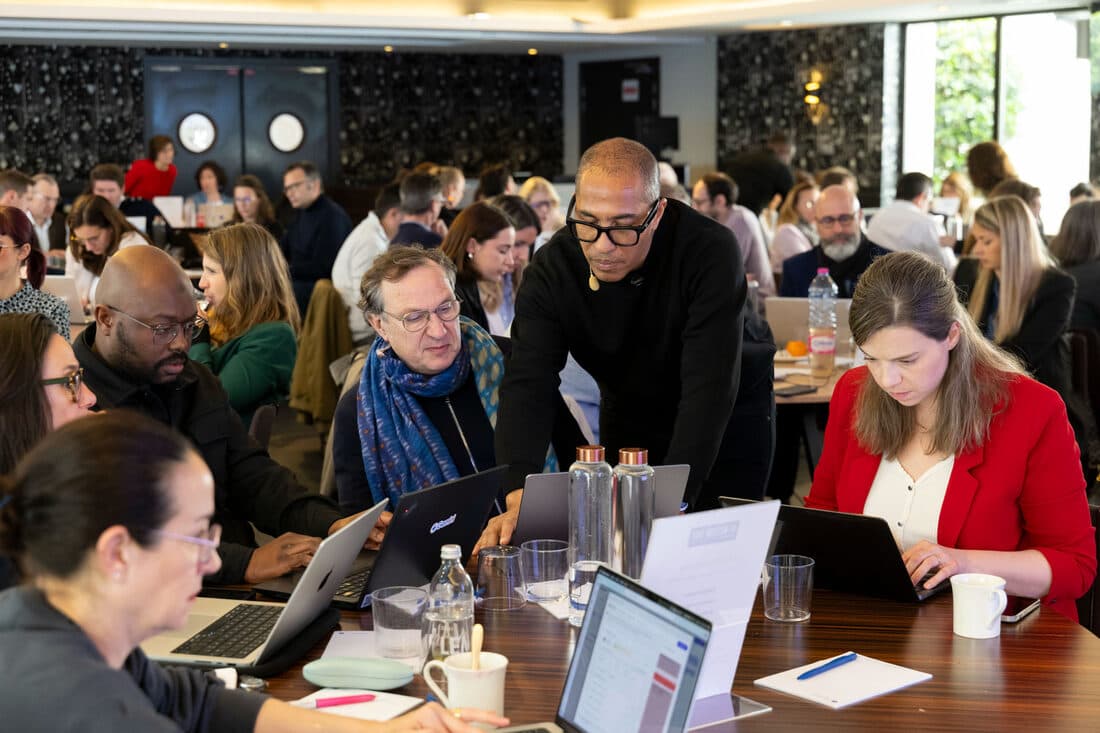
Go deeper on one subject and work on concrete situations.
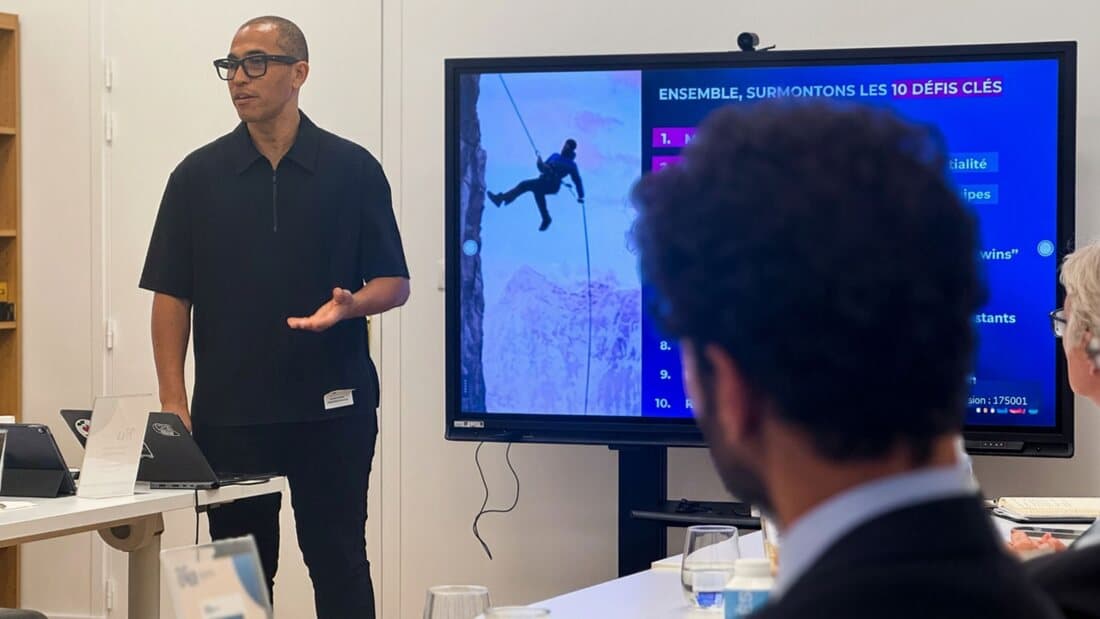
Help a leadership team understand, weigh and decide.
Any of the seven topics can take the shape of an executive experience. “Leading the augmented company” is simply the one designed for that format.
All three formats exist in French and in English.
A keynote in the morning for the whole organisation, a masterclass in the afternoon for the managers. Or an executive experience beforehand, so that the leadership team arrives prepared on the day of the convention. This is the configuration Salime recommends most often for a full-day event: the collective understands, then part of the collective gets its hands in.
The preparation stays the same. It is the sequences that change.
French and English.
Every proposal is drawn up according to the format, the length, the location and how far the content is tailored. Give us your envelope, even a rough one: it is the fastest way to check that we are in the same range.
Ideally six to ten weeks for a convention, four weeks for an executive committee. These are markers, not rules: it depends on the diary and on how clear the brief is. When a date is free and the context is sharp from the first exchange, Salime can move a great deal faster. Ask even two weeks out: the answer comes within 24 hours, and it is straight.
Across Europe, the Americas, Africa, the Middle East and Asia.
The talk follows the thread of maars Compass, the method that gives the movement a direction. The Activation Keynote is how Salime works on stage; maars Compass is what says where to go next.
Understanding maars CompassThe keynote creates a shared reading for a large number of people, in 20 to 90 minutes. The masterclass puts a small group to work on its own situations, for 90 minutes to half a day. The first makes people understand, the second makes them practise. Both follow the same approach, the Activation Keynote.
Yes, and it is the most common configuration for a full-day event. A keynote in the morning for everyone, a masterclass in the afternoon for the managers. Or an executive experience beforehand to prepare the leadership team.
Yes, for all three formats. A remote talk is not run like a talk in a room: the sequences are shorter, the moments of participation more frequent. The format is adapted, not transposed.
A headset microphone, a projector or screen, an audio output and a confidence monitor visible from the stage. The full technical rider is available on request from the Book Salime page.
Yes, subject to prior agreement and for internal use. The details are settled at the briefing.
No. Many organisations arrive with a context rather than a title. The topic and the format are decided together, from your audience and your goals.
Describe your event, your audience and the result you are after. Salime will tell you which format fits, including if none of them really matches what you need.
Page last reviewed on
Answers are generated from this site's content. For a firm request, use the form.